Best Colors For Business Websites: How To Choose The Right Color Palette For Your Brand
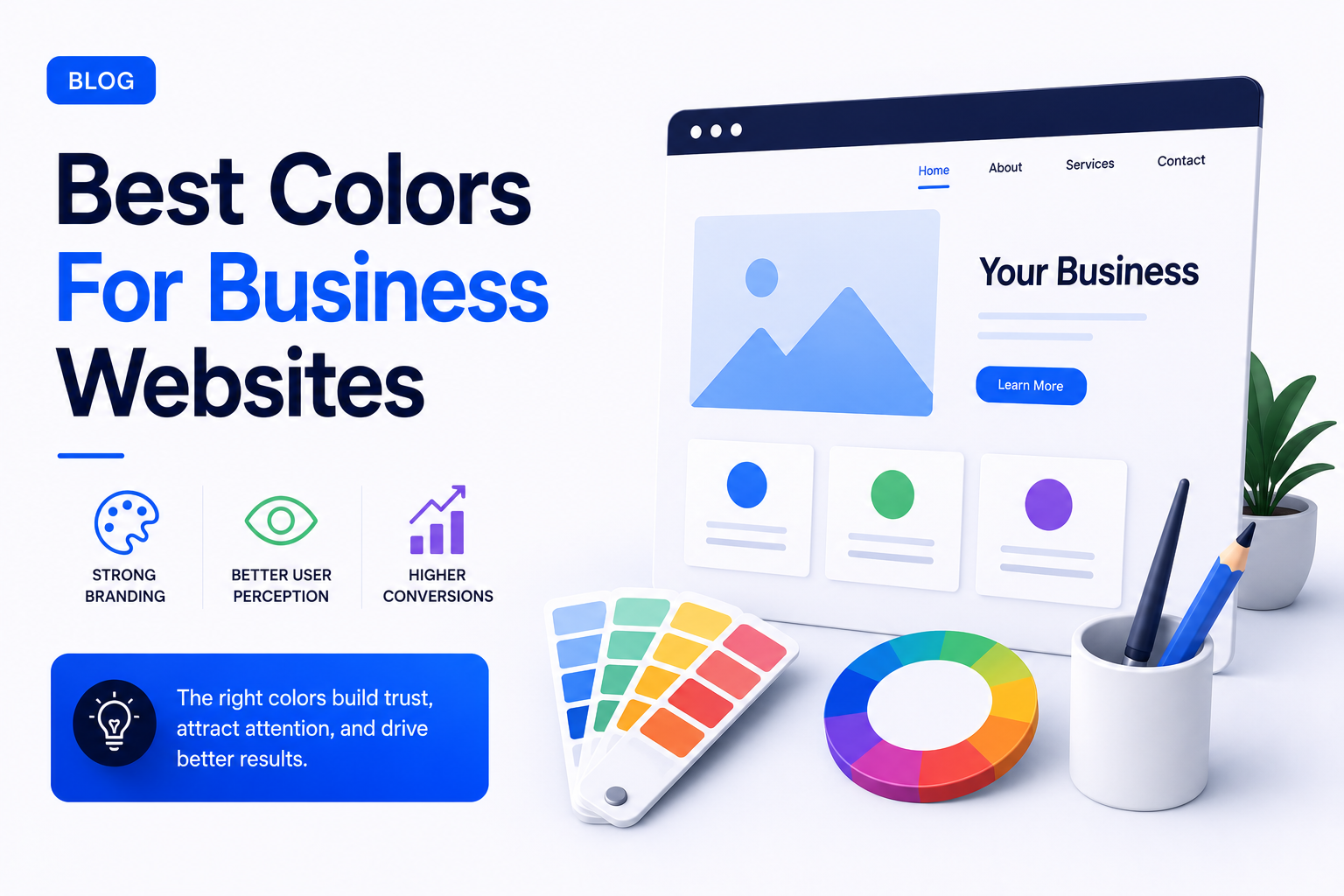
Color is one of the most powerful elements of website design. Long before visitors read your content, explore your services, or contact your business, they form impressions based on what they see. The colors used throughout your website influence emotions, perceptions, trust, and purchasing decisions.
A carefully selected color palette can strengthen your brand, improve user experience, increase conversions, and help your business stand out in a competitive market.
Whether you're launching a new website or redesigning an existing one, understanding how colors impact visitors can help you create a more effective online presence.
Why Website Colors Matter
Colors affect how people feel and interact with a website.
The right color palette can:
- Create strong first impressions
- Build trust and credibility
- Improve brand recognition
- Guide user behavior
- Increase engagement
- Boost conversions
Colors communicate messages without words and play a significant role in shaping customer perception.
The Psychology Of Color In Business
Different colors are associated with different emotions and meanings.
While individual preferences vary, certain colors consistently create specific psychological responses.
Understanding these associations helps businesses make smarter branding decisions.
Blue: Trust, Professionalism, And Reliability
Blue is one of the most popular colors in business and web design.
It is commonly associated with:
- Trust
- Security
- Professionalism
- Reliability
- Stability
Many banks, technology companies, and professional service providers use blue because it inspires confidence.
Blue works particularly well for:
- Corporate websites
- Financial services
- Technology companies
- Consulting businesses
- Healthcare organizations
Green: Growth, Health, And Success
Green is strongly associated with nature, growth, prosperity, and wellness.
Businesses often use green to communicate:
- Growth
- Health
- Freshness
- Balance
- Sustainability
Green is ideal for:
- Health businesses
- Agriculture companies
- Environmental organizations
- Financial services
- Organic product brands
Red: Energy, Urgency, And Action
Red is a bold and attention-grabbing color.
It often represents:
- Passion
- Excitement
- Urgency
- Energy
- Action
Red can be effective for:
- Promotional campaigns
- Call-to-action buttons
- Sales events
- Entertainment brands
Because red is highly stimulating, it should be used strategically.
Yellow: Optimism And Positivity
Yellow is often associated with happiness, positivity, and creativity.
It can help create:
- Friendly experiences
- Energetic branding
- Positive emotions
- Attention-grabbing highlights
Yellow is often used as an accent color rather than a dominant color.
Orange: Creativity And Enthusiasm
Orange combines the energy of red with the positivity of yellow.
It often communicates:
- Creativity
- Innovation
- Friendliness
- Confidence
Orange can be highly effective for startups and modern brands seeking a dynamic appearance.
Purple: Luxury And Creativity
Purple is often associated with:
- Luxury
- Creativity
- Innovation
- Sophistication
It is commonly used by premium brands and businesses seeking a distinctive visual identity.
Black: Elegance And Authority
Black communicates sophistication, power, and elegance.
It is often used by:
- Luxury brands
- Fashion companies
- High-end services
- Premium product businesses
When used properly, black creates a modern and professional appearance.
White: Simplicity And Clean Design
White represents simplicity, clarity, and cleanliness.
Benefits include:
- Improved readability
- Better visual organization
- Modern aesthetics
- Professional appearance
White space is essential for creating user-friendly websites.
Gray: Neutrality And Professionalism
Gray is often used as a supporting color.
It communicates:
- Balance
- Neutrality
- Professionalism
- Sophistication
Many modern websites use shades of gray to create clean and elegant designs.
How Colors Influence Customer Decisions
Color choices can influence user behavior.
Visitors often make subconscious judgments about businesses based on color schemes.
The right colors can encourage:
- Trust
- Engagement
- Purchases
- Form submissions
- Brand loyalty
Strategic color selection contributes to stronger conversion rates.
Choosing Colors That Match Your Brand
Your website colors should align with your brand identity.
Ask yourself:
- What emotions should my brand communicate?
- Who is my target audience?
- What values define my business?
- How do I want customers to perceive my company?
The answers will help guide color selection.
Understanding Primary, Secondary, And Accent Colors
Primary Color
Your primary color represents the core of your brand identity and appears most frequently throughout the website.
Secondary Color
The secondary color supports the primary color and adds visual variety.
Accent Color
Accent colors are used sparingly to draw attention to important elements such as buttons and calls-to-action.
Popular Color Combinations For Business Websites
Blue And White
A timeless combination that communicates professionalism and trust.
Green And White
Ideal for health, wellness, agriculture, and environmentally focused businesses.
Black And Gold
A premium combination often associated with luxury and exclusivity.
Navy Blue And Gray
A sophisticated choice for corporate and consulting businesses.
Dark Green And Light Green
A modern and fresh palette that communicates growth and sustainability.
Choosing Colors For Different Industries
Technology Companies
- Blue
- Navy
- Gray
- White
Healthcare Businesses
- Blue
- Green
- White
Financial Services
- Blue
- Green
- Gray
Restaurants
- Red
- Orange
- Yellow
Luxury Brands
- Black
- Gold
- Dark Gray
The Importance Of Color Consistency
Consistency strengthens brand recognition.
Your chosen colors should appear consistently across:
- Website pages
- Social media
- Marketing materials
- Email campaigns
- Advertisements
- Business cards
Consistent branding creates familiarity and trust.
Using Color To Improve Conversions
Colors can help guide users toward important actions.
For example:
- CTA buttons should stand out
- Important messages should be highlighted
- Forms should be visually clear
- Navigation should remain easy to use
Effective color contrast improves usability and conversions.
Common Color Mistakes To Avoid
Using Too Many Colors
Too many colors can create visual confusion.
Poor Contrast
Low contrast reduces readability and accessibility.
Ignoring Brand Identity
Colors should support your overall brand message.
Following Trends Without Strategy
Choose colors that support long-term branding goals.
Overusing Bright Colors
Excessive bright colors can overwhelm visitors.
Recommended Color Palette For A Web Design And Digital Marketing Business
For businesses focused on web design, app development, and digital marketing, a professional color palette might include:
- Primary: #1C4971
- Secondary: #2E6DA4
- Accent: #4CAF50
- Background: #F8FAFC
- Text: #222222
This combination communicates professionalism, trust, innovation, and growth.
Creating A Color Palette That Supports Growth
The best website colors are not chosen randomly. They are selected strategically to reflect brand identity, communicate values, influence customer behavior, and create memorable experiences.
A well-designed color palette strengthens your brand, improves user experience, and helps your website achieve its goals.
By understanding color psychology and applying it thoughtfully, businesses can create websites that not only look professional but also attract customers, build trust, and support long-term success.
Need a professional website with a custom brand color strategy? Luckson Denis designs modern websites, visual identities, and digital experiences that combine strong branding, user experience, and conversion-focused design to help businesses grow online.